
Pavers vs Cement Driveway – Which One’s the Smarter Choice?
If you’re thinking about pavers vs a cement driveway for your home in 2025, then here’s what you need to consider when choosing pavers over poured concrete. Each has its own advantages and disadvantages that can affect how durable your driveway is, what it looks like, and how easy (or difficult) it is to maintain. This blog can assist you in comparing pavers vs cement driveways so that you can choose the best option for your home’s style, and budget and long-term value.
What Are Driveway Paver Stones?
What are Driveway Paver Stones? Driveway paver stones are the individual pieces of stone or concrete used to construct your driveway. These pavers are put into place with a regular or herringbone pattern over a prepared bed, allowing strength and flexibility to avoid cracks as well as adaptation to ground shifts.
Pros of Driveway Paver Stones
- Long-lasting and durable
- Repair it less expensively by replacing individual stones.
- Available in a variety of colors and styles
- Better water drainage gaps between pavers.
- A good grip without any worry about slipping.
Cons of Driveway Paver Stones
- Higher upfront cost
- Needs periodic upkeep such as joint re-sanding
- Gaps may allow weeds to grow
- Installation takes longer than concrete
What is a cement (concrete) driveway?
A cement driveway is a paved surface built by pouring well-mixed cement at the top of its base. It sets up into a hard, smooth slab and can last 20 to 30 years or longer. The benefit of concrete driveways is their versatility; they can be colored or stamped to your desire.
Pros:
- Durable and long-lasting
- Low maintenance
- Customizable with colors and textures
- Stays cool in hot weather
- Cost-effective over time
Cons:
- Higher upfront cost
- Cracks from temperature changes or ground movement
- Repairs are difficult and costly
- Susceptible to stains
- Requires curing time before use
In summary, driveway paver stones are an attractive alternative to concrete that’s durable and flexible, making it far easier to repair, and clearer water rinse through better than sand. But they require more investment up front and ongoing maintenance to keep the driveway in top condition.
Key Differences Between Pavers and Concrete
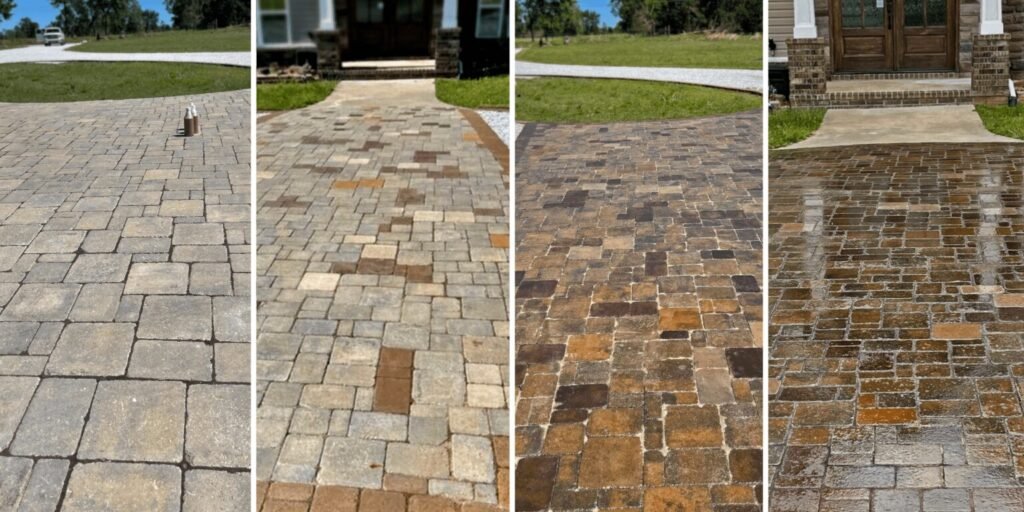
Two of the most common options homeowners have when picking driveway material are pavers and concrete, so make sure you know some key differences about these materials before making any decisions.
Structure and Installation
Concrete driveways are formed and poured as a one-piece slab, which means you won’t have any seams or contrasting colors anywhere on your driveway. Installation can usually be done quickly and with less effort. Paver driveways are dry-laid laid placed on several inches of compacted bedding sand which in turn has been extended over a gravel base.
Durability and Maintenance
This creates an incredibly strong system susceptible to the flexibility with which pavers move as a vehicle of soil contraction and expansion yet remain resistant to cracking. Broken pavers can be replaced without disturbing your entire driveway. Concrete is robust, but not immune to cracking from temperature swings, soil movement or heavy loads. It’s expensive and spotty to fill the cracks in concrete.
Cost
Concrete driveways normally cost about $4 to $15 per square foot in the beginning, which is slightly cheaper. Paver driveways are pricier, usually hovering between $10 and $30 per square foot, largely due to the labor involved and the cost of materials. But pavers can pay for themselves over the long term by reducing repair costs.
Design and Aesthetics
Pavers come in a variety of colors, shapes, patterns and sizes, making it possible to customize for any home. Concrete can be stained or stamped for decorative effect, but the design range is narrower than with pavers.
Drainage and Environmental Impact
The joints of a paver allow water to flow through and, therefore, runoff will be minimized as drainage is improved. Concrete is a nonporous substance, which means it creates greater water runoff and that can contribute to erosion and drainage problems.
Summary Table
| Feature | Concrete Driveway | Paver Driveway |
| Structure | Solid slab | Individual interlocking stones |
| Durability | Prone to cracking | Highly flexible, resists cracking |
| Repair | Costly, visible patches | Easy, individual stone replacement |
| Installation | Faster, less labor | Slower, labor-intensive |
| Cost | $4 – $15 per sq ft | $10 – $30 per sq ft |
| Design Options | Limited | Vast variety of shapes & colors |
| Drainage | Impermeable | Permeable, better water drainage |
The choice of pavers vs concrete really depends on your lifestyle, aesthetics, budget and the amount of durability and maintenance that you are looking for. Pavers are higher-end and more durable, while concrete is a quicker, cheaper option that looks nice and clean.
Professional Installation Required: Concrete vs. Paver Driveways
Concrete driveways are poured as a solid slab over a prepared and compacted gravel base. This process involves clearing and grading the site; setting the forms; adding reinforcement such as wire mesh; pouring and finishing the concrete, promptly followed by curing for about 7 days. Due to the precision involved and required curing time, professional installation is necessary both to maintain strength and avoid cracking.
Paver driveways are built on a base of crushed stone, which is compacted and covered with a bed of sand. “On an installation, you are digging out, prepping the base, and then setting pavers in patterns and filling joints with sand. This workmanlike job requires professional supplies and a learned hand to ensure level straights, stability, and years of hard wear.
Both driveway installation options need professional assistance to get the comfort of high-quality and reliable outcomes.
Conclusion
Choosing between pavers and concrete for your driveway depends on your budget, style preferences, and maintenance expectations. The cleaner look, quicker installation and cost efficiency offered by concrete make it a great choice for driveways which are already putting up with enough of the elements. Paver driveways deliver more design options, along with better drainage and the flexibility to make repairs, but they come with a higher up-front cost and a longer installation time. Whatever driveway you choose, it will need to be installed by professionals. Maura Mason can help you with professional installation and discuss what the best driveway for your home is.
FAQs
What is the difference between paver and concrete driveways?
Concrete is a solid slab; pavers are individual stones that fit together.
Which driveway option is more durable?
Pavers are more flexible and less likely to crack; concrete is rigid, but cracks.
Is professional installation necessary?
They do, anyway; both rely on professionals to properly prepare and install the base.
What maintenance is needed?
Concrete may necessitate crack repairs and sealing; pavers need joint re-sanding and occasional sealing.
Can the driveway design be tailored to my needs?
Pavers are a bit more tailor-made from the design perspective, while concrete can be stamped or tinted but has much less wiggle room.
Which driveway has better drainage?
Pavers allow water to seep through joints; concrete is impervious and can lead to runoff.