

Preparation before a concrete driveway is installed is far more than choosing the proper color or pattern and it is about the ability to lay the groundwork for several years of crack-free, even and beautiful curbside appeal. Suppose that your driveway not only supports heavy cars and rough conditions but also improves the value and appearance of your property without any problem. The secret? Proper preparation that caters to all the factors below the ground, including soil stabilization, intelligent drainage and correct slab specifications. Jump these steps and you will have expensive cracks and not even settling and irritating repairs in the future. Be it a silky smooth/modern driveway, old old-fashioned, rocky path, you are winning a lottery by learning how to prepare the stage first.
Are you willing to explore the most vital things that you must understand to ensure that concrete driveways are long-lived? We will deconstruct every important detail to ensure that your investment will be healthy and proud for decades!
What is the Difference Between Driveway Subgrade Stabilization and Sub-Base Preparation?
The term driveway subgrade stabilization is the technology of enhancing and compacting the current soil beneath the driveway to enhance its structural strength and reduce its movement. This may include grading, lime or cement addition or compacting the soil.
The sub-base preparation involves the application of a layer of granular material over the stabilized subgrade in order to drain, distribute loads and the underlying working surface to the concrete pour. The right sub-base material avoids the collection of water and assists in ensuring the integrity of the driveways.
What are the Best Driveway Sub-Base Material Options for Long-Lasting Concrete?
The driveway sub-base material should be of good drainage and stability. Common options include:
- Crushed stone or gravel: It is a well-liked option because it is considered to have the qualities of drainage and bearing load.
- Recycled concrete aggregate: Greener and friendlier to the budget; however, it should be of a good grade.
- Sand: It may be utilized as a leveling layer, but it is not good when applied alone under heavy loads.
The correct choice of material is dependent on the conditions of the local soils, budget, and anticipated weight of the driveway.
What are the Minimum Driveway Depth Requirements for Residential Projects in My Region?
In the case of residential projects, the typical structure includes:
- Under-grade stabilization layer: 4–6 inches
- Sub-base layer: 4-6 inches of stone or gravel, which has been compacted
- Slab: 4-6 inches of concrete, as per load
Local building codes always have specific requirements on the depth of the driveway. This depth is increased in regions where the soil is poor, or where there is an enormous amount of truck traffic, to avoid problems in the future.
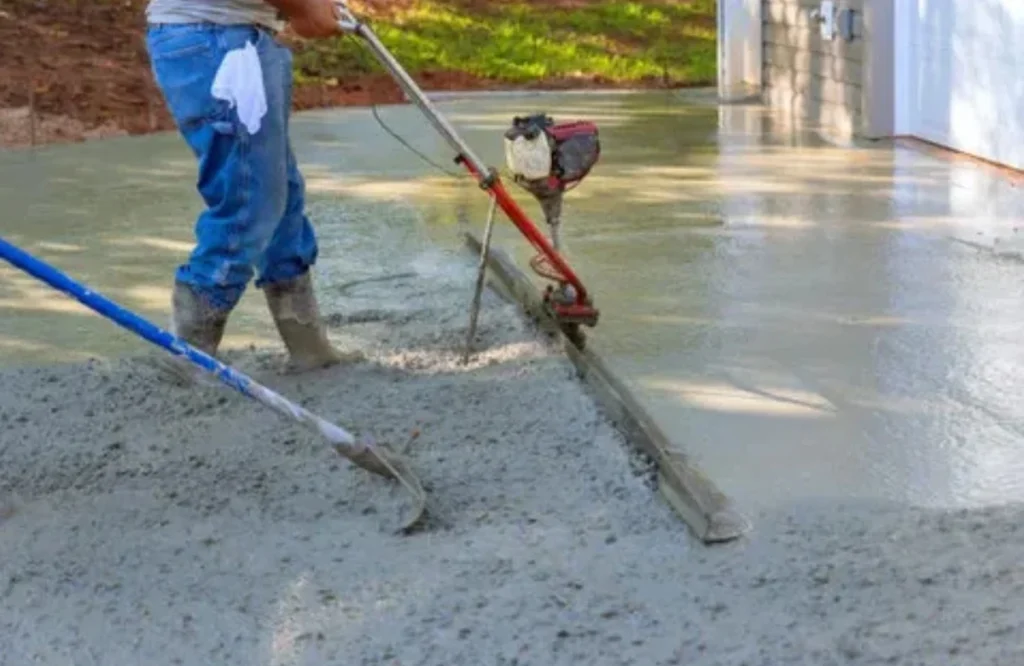
Water is the Enemy: Planning for Proper Drainage
Neglect of drainage is the fastest method of destroying a concrete driveway. Water under the slab or surrounding results in erosion, freeze-thaw damage and cracks.
How to Develop a Functional Driveway Drainage Plan to Move Water Away from the Foundation?
A good driveway drainage program entails grading the driveway slope so whereby the slope is away and out of the house and foundation. The water is returned to the edges or drainage without collecting on a low slope of an average of 1/8 to 1/4 inch per foot.
Drains, channels or swales should be installed along the driveway to prevent runoff. The downspouts and gutters should also be made to do away with the driveway.
What are the Essential Steps for Effective Drainage System Planning Beneath a New Slab?
- Dig to a level of allows the subgrade, sub-base, as well as the drainage layer.
- Apply permeable driveway sub-base material to prevent waterlogging.
- Porous drainage pipes in gravel trenches should also be considered along the slab edges.
- Do not go to low places where water may accumulate and cause harm.
How Does Poor Drainage Lead to Concrete Driveway Problems Avoided by Proper Preparation?
Lack of proper drainage leads to the accumulation of water beneath the slab, making the base layers weak. This causes soil erosion, freeze-thaw problems in frosty climates, slab heaving and cracking. These are common failures that can be greatly reduced in case proper drainage system planning is implemented during preparation.
The Slab Specification: Thickness and Reinforcement
The concrete slab itself requires careful design to handle residential vehicle weights and environmental stress.
What is the Recommended Residential Concrete Thickness to Ensure Durability and Prevent Cracking?
For most residential driveways, a residential concrete thickness of 4 inches is the minimum. For heavier loads, such as RVs or frequent truck traffic, increasing thickness to 5 or 6 inches is advisable.
What Driveway Installation Advice is Critical Regarding Reinforcement (Wire Mesh vs. Rebar)?
Reinforcement averts cracking and slab strength is enhanced. Options include:
- Wire mesh: Low cost and simple to use, although it is not as effective in the not so heavy loads.
- Rebar: Steel bars that are in a grid offer better strength and prevent cracking.
In the case of stability, rebar should be used in driveways that are likely to support vehicles that are heavy vehicles. Take expert driveway installation advice to apply reinforcement in the slab in the centre.
How Do Planned Load Weights Affect the Required Depth and Thickness of the Slab?
The heavier vehicles should have a thicker slab and reinforcement. Passenger cars with lightweight construction could be dependent on 4-inch slabs of wire mesh, whereas trucks and heavy machinery require dense slabs of rebar.
Quality Control: Critical Inspection Points
Even the best plans fail if execution falls short. Homeowners can monitor key concrete inspection points during preparation and before pouring.
What Are the Main Concrete Inspection Points Before the Ready-Mix Truck Arrives?
- Undertake verification of appropriate depth and compaction of the driveway subgrade stabilization and sub-base.
- Check the consistency of sub-base material and grading.
- Check the slopes and systems of drains.
- Placing of the reinforcements of checks, proper coverage and spacing.
- Make sure that forms are stable, even and supported.
What Are the Best Practices for Setting and Securing Forms According to Expert Driveway Installation Advice?
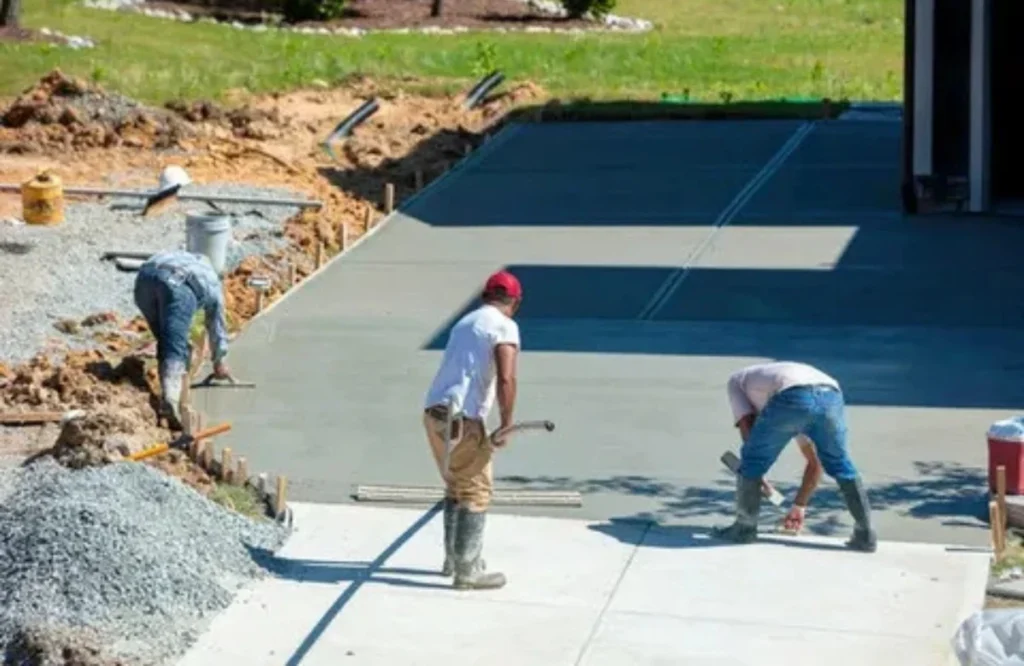
Forms need to be well fixed and aligned to avoid movement when pouring. Install stakes and braces that are sunk deep into the undisturbed earth. Remember to make sure that forms are accurate and the planned driveway dimensions and slopes are accurate.
How Should Compaction of the Sub-Base and Proper Moisture Content Be Checked?
Check soil compaction and compaction test (e.g., Proctor test) to ensure that the subgrade and sub-base are compacted to the necessary density. Excessively dry or excessively wet sub-base will affect the hardness and drainage resulting in a lowering of the concrete durability.
Preventing Future Failure: Common Mistakes and Solutions
Cracking and settling a major concerns to many homeowners. Overcome these fears by learning what to do when facing failures.
What Are the Top Three Concrete Driveway Problems Avoided During the Preparation Phase?
- Poor driveway subgrade stabilization resulted in settlement.
- Cracking due to a lack of sufficient slab thickness or reinforcement.
- Driveway draining failure as a result of a poor drainage plan.
How Does Inadequate Driveway Subgrade Stabilization Lead to Costly Repairs Later?
Unless soil subgrade is properly stabilized and compacted, it drifts with time under the weight of the driveway. This results in cracks, sinking and broken concrete, which involves a costly patching or replacement.
Why is Proper Placement of Expansion and Control Joints Non-Negotiable?
Expansion joints regulate the location of the cracking of the concrete that expands and contracts. When these joints are not skipped or misplaced, the result is some random cracks that are not only unsightly but also compromise the integrity of the slab.
Conclusion
In order to construct a sustainable concrete driveway, make sure that the subgrade stabilization of the underlying soil is carried out to reinforce the soil before constructing the driveway. The right driveway sub-base material shall be of sufficient depth to be stable and to drain. Add a good drainage system in place of the slab to ensure water does not run on the slab, causing destruction. The slab concrete must be reinforced properly and of the required thickness of concrete recommended for residential use. Pouring Precheck forms and reinforcement, and ensure expansion and control joints have been installed before the pouring occurs.
Arrange a last-minute check with your contractor before the pour in order to detect any problem before they happens. Once poured, it is important to keep the slab damp for at least 7 days to prevent cracking and after that, apply a sealant in order to protect against water and stains to make the slab long-lasting.
For expert concrete driveway installation and top-quality preparation, trust the professionals at Maura Masons Corp. Contact us today to get your project started right and enjoy a durable, beautiful driveway that lasts for decades!
FAQ’s
Q: Is a Vapor Barrier Necessary Under a Residential Concrete Driveway Slab?
A: A vapor barrier is also advisable in highly moist areas to avoid the rise of water vapor, which will weaken the slab. Consult local codes.
Q: How Much Slope is Required for a Good Driveway Drainage Plan?
A: Aim for a slope between 1/8 inch and 1/4 inch per foot away from your home’s foundation to ensure proper runoff.
Q: Can I Use Recycled Crushed Concrete as a Driveway Sub-Base Material?
A: Yes, recycled crushed concrete can be used if it is well-graded and compacted properly, offering an eco-friendly and cost-effective option.
Q: What is the Minimum Time Needed for Proper Driveway Subgrade Stabilization Before Pouring?
A: Typically, soil stabilization should be compacted and allowed to settle for several days to a week, depending on soil type and weather conditions.